
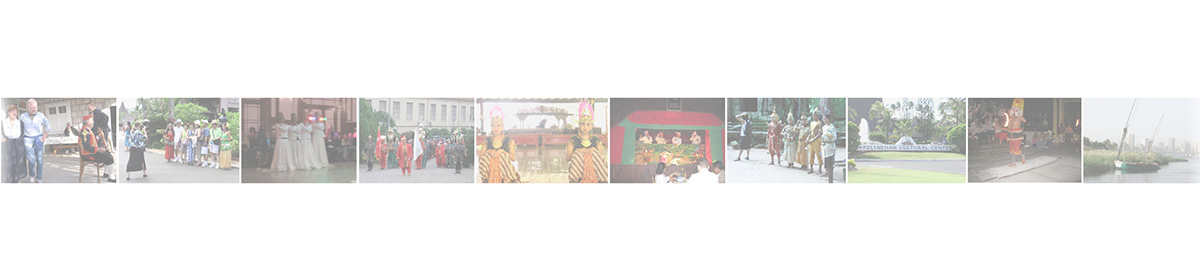
The programs documented in these films in general consist of short presentational music, dance, and dramatic pieces that have been purposefully shaped by their producers to reference authentic traditional practices and simultaneously appeal to the sensibilities of cosmopolitan audience members who daily consume professionally produced commercial entertainment. As discussed elsewhere on this site, almost all of the elements seen in these documented presentations are based on non-commercial expressive culture associated with indigenous political or social institutions, religious traditions, agricultural practices, or lifecycle celebrations. For presentation to tourists, these pieces have been split from their locally meaningful contexts and reconstituted as objects of entertainment that may also carry some educational value. Generally, the artistic facets of the represented practices–their musical instruments, musicianship, repertoire, dance movements, costuming, puppets–are retained but sometimes “cleaned up” or “spectacular-ized” to increase their immediate impact on audience members. The open-ended participatory interaction characteristic of many traditional practices more often than not gives way to a temporally bounded and thoroughly planned and rehearsed choreography–a set work.
Producers of tourist shows are keenly aware that many tourists value exposure to artistic expression associated with particular domains of traditional life. Program items seen in these films that carry associations with spiritualism in general and religious practices in particular include: the Mevlevi Sufi ceremony (Turkey Dervishes); the “Sufi” whirling dance (Egypt); several items on the Kandyan dance program (Sri Lanka); some segments of the review at the Polynesian Cultural Center (Hawaii); and the aestheticized “offering to the spirits” prior to the Yogyakarta dance drama (Indonesia Dance). Associations between program items and traditional aristocratic and/or military life are present in the music, dance and theater forms presented in the Sultans Palace of Yogyakarta (Indonesia Palace) and the dinner show in Siem Reap (Cambodia), and the Ottoman military music presentation (Turkey Ottoman). Traditional entertainments associated with communal and family celebrations, be they religious or agricultural in their focus, are also programmed: puppet troupes in the past enlivened Burmese village celebrations (Burma); the lindo dance was performed in Dubrovnik-area villages during winter carnival and at wedding celebrations (Croatia); and an item in the Siem Reap dinner show references a Khmer folk dance associated with fishing (Cambodia). Even performance items based on traditional practices that were long ago transformed into show pieces for the tourist market have an air of “tradition” to them and are of interest to tourists: many of the “traditional” dances presented at the Polynesian Cultural Center have long been performed primarily for tourists or as competition pieces (Hawaii); and the belly dance on the Nile luncheon cruise (Egypt) has long been an integral component of any Middle Eastern tourist show.