
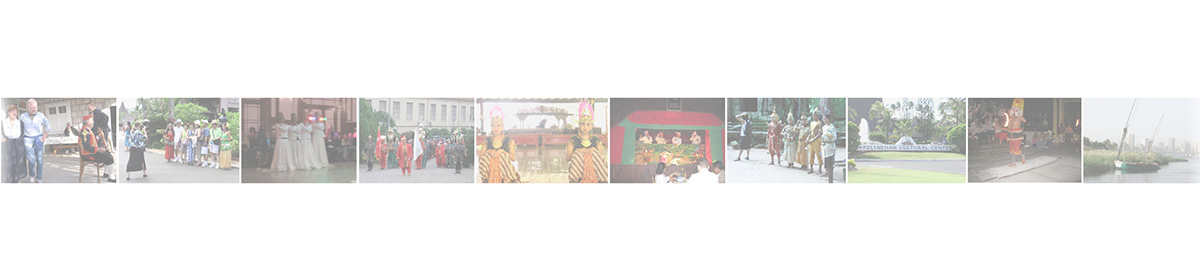
The “who” of an event involves not only the performers and the audience, but also the often more invisible (to the audience) producers of the presentation. All of these constituencies, and the relationships between them, help inform one’s understanding of “what’s going on” in the grandest sense during a tourism encounter performance.
The audiences at the events documented in these films were comprised of foreign tourists (attending either individually or as part of a group) and, sometimes, domestic residents (either from the immediate locale or as members of tourist or school groups). The audiences at the Indonesia Palace and the Turkey Ottoman events were clearly a mix of foreign and domestic individuals in large part because the institutions in which the encounters were situated regularly attract and accommodate both foreign and domestic visitors. The Croatia (first half) performance also had a mixed audience given that, in addition to foreign and domestic tourists who happened to be visiting Old Dubrovnik that day, there were also the families of the children who were performing present. The rest of the presentations had audiences that were comprised entirely of foreigners so far as I could tell, although it is possible that a few domestic tourists were present at some of them. As a group, these latter events had much more of a “show” sensibility to them than was the case with the Indonesia Palace and Turkey Ottoman events, suggesting that the producers behind them scripted the encounters to meet the expectations of cultural outsiders and their associated cosmopolitan sensibilities of entertainment.
I regret not being able to find out more about the performers in each of the contexts. As a member of tour groups following tight schedules, ethnographic inquiry was simply not possible. Ideally, I would have been interested in learning how the performers acquired their skills (through gradual assimilation and apprenticeship or through enrollment in an arts training institution), where else they perform the repertoire presented at the tourist encounter performance (and if so how their performance might differ in those other settings), how their particular group is organized socially and financially, how central is their performance activity to their livelihood, and what their views are about what they perform and who they perform it for. I can answer some of these questions for only a few of the documented performances. At the Polynesian Cultural Center (Hawaii), the majority of the performers are students at the Brigham Young University and their performance is part of their work-study financial aid. The Turkey Dervishes performers are all members of a Mevlevi “lodge” and learn their performance skills with the aid of musical notation within that organization. Several of the younger musicians seen in the film were recent inductees into this order and were concurrently students at various Istanbul universities. Members of the Ottoman-era military band seen in Turkey Ottoman, I was told, were current and past members of the premier modern military band in Turkey, which is situated at the Military College at which the film was shot. The performers seen in Croatia (second half) learned their tradition orally in the context of their village and have adapted it to accommodate encounters with tourists. A range of backgrounds are found amongst the performers seen in Indonesia Palace: some are volunteer court musicians ranging from amateur to professional musicians; others are students learning in a structured way the local tradition at area performing arts high schools and colleges; yet others are amateur neighborhood groups under the tutelage of a professional-quality musician. The majority of the performers participating in the Sri Lanka presentation are Bereva, a low-status caste traditionally specializing in ritual drumming and dancing. Just from this small body of information one can begin to sense the variation one encounters at cultural presentations in terms of the performers, their training, and their motivations for performing in front of tourists.
It would appear that “close encounters” between audience members and performers are viewed as desirable and thus scripted into many events. The post-performance photo-op, in which audience members are invited to have their pictures taken with exotically costumed dancers, is a common phenomenon (see Cambodia and Indonesia Dance). At the Polynesian Cultural Center (Hawaii), this goes on more-or-less throughout the day rather than being restricted to the post-performance moment. Having your photo taken with your Croatian peasant hosts in Croatia (second half) was possible throughout that encounter. In the Indonesia Palace and Turkey Ottoman encounters, tourists were welcome to move around and get close enough to the performers to have their pictures taken in close proximity to them. In a few contexts, volunteer tourists are actually scripted into the presentations as performers (Hawaii, Egypt, Croatia). This latter practice is a clear example of the playfulness and the lack of distinction between reality and fantasy that is so characteristic of the “post-tourist” experience mentioned elsewhere in this site. Through such scripted encounters between performers and audience and with the aid of photography, tourists can souvenir-ize their lived encounter with the Other.
Encounters between tourists and cultural presenters don’t just happen. An individual or group of people functioning as the script writer/s for a cultural tourism encounter is making programming decisions, deciding where and when the event takes place, generating and distributing advertising that will be alluring to a target clientele, contracting performers and dictating how they contribute to the overall event, deciding on and facilitating a desired performer-audience relationship for the event, and paying attention to myriad behind-the-scenes logistical matters (booking with tour agencies, providing transportation for audience to and from the venue, dining arrangements, hiring stage crews, and so forth). Although such producers may appear anonymously amongst the performers at a show, more often than not these “conceivers of encounter” are not present, at least not “on stage.” This is probably nowhere better illustrated than at the Polynesian Cultural Center (Hawaii). Max Stanton writes:
It is a sobering assignment to coordinate the efforts of five hundred student-workers and three hundred full-time employees so that the end product will, at 10:00 A.M. each morning, greet the first visitor as “just another happy day in Polynesia.” Behind the scenes, there are electricians, payroll clerks, mechanics, florists, public relation experts, anthropologists, and a host of other persons all working to make the operation run smoothly … so that those persons who are directly involved in face-to-face contact with the visitors are able to be at ease and sustain the illusion of spontaneity and relaxed casualness. (p. 252)
For the other ten encounters documented on this site, the number of specialists overseeing preparations for and directing the performances is on a much smaller scale than that seen at the Polynesian Cultural Center. But one can always be sure that these behind-the-scenes producers are there at work creating an illusion of Otherness for their audience to encounter and enjoy.
Source Cited:
Stanton, Max E. “The Polynesian Cultural Center: A Multi-Ethnic Model of Seven Pacific Cultures. In Hosts and Guests: The Anthropology of Tourism. 2nd edition. Smith, Valene L., ed. Philadelphia: The University of Pennsylvania Press, 1989. 247-262.